Fougasse (French-Style Flatbread)

Homemade fougasse is not just any flatbread; it’s a delightful experience. With a golden crust that gives way to a tender, airy interior, this French-style flatbread elevates simple ingredients into something truly special. It’s often filled with fragrant herbs and drizzled with olive oil, making it a fantastic appetizer, side dish, or even a snack. If you’re looking for a bread that impresses without the fuss, this is the one for you!
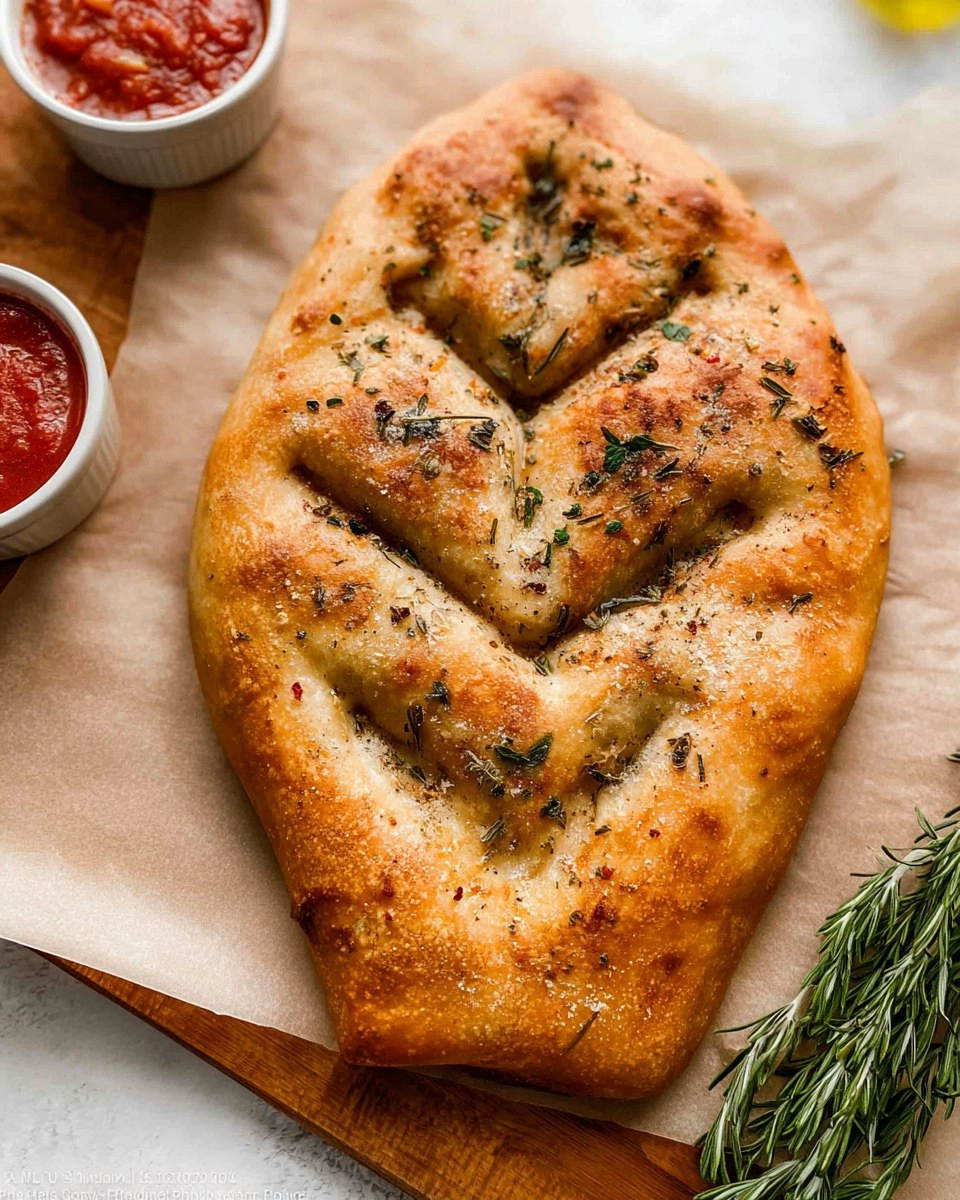
I still remember the first time I encountered fougasse while traveling through France. The bakery’s warm scent filled the air as I entered, and the sight of beautifully shaped loaves beckoned me closer. Each loaf was adorned with slashes that resembled leaves, giving it a unique look that is both rustic and elegant. Preparing this homemade version brings me back to that charming bakery, and I can assure you, the taste is just as memorable as the experience. The fact that you can whip this up in just a few hours, and with minimal ingredients, makes it a must-try for any home baker. Ready to dive into the process? You won’t regret it!
Table of Contents
Why You’ll Love This Recipe
- Simple & Quick: Preparation only takes about 45 minutes, making it perfect for a spontaneous baking adventure.
- Irresistible Flavor: The combination of bread and whole wheat flours with olive oil creates a rich, satisfying flavor that’s hard to resist.
- Eye-Catching Appeal: Impress guests with its beautiful leaf design that looks as good as it tastes.
- Flexible Serving: Perfect for dipping in olive oil, pairing with salads, or just enjoying on its own.
- Diet-Friendly Options: Easily adaptable to incorporate different herbs, making it versatile for various dietary preferences.
Ingredients You’ll Need
- 1 cup (130g) bread flour: Provides the base structure of the bread. Always spoon and level for accuracy.
- 1/8 teaspoon instant or active-dry yeast: This small amount initiates fermentation in the starter, ensuring a lovely flavor.
- 1/2 cup (120g/ml) room-temperature water: Should be around 70°F (21°C) for optimal yeast activation.
- 1 and 1/2 cups (195g) bread flour: Used in the main dough; choose a high-protein version for best results.
- 1/2 cup (65g) whole wheat flour: Adds depth and nuttiness; can substitute with all-purpose flour if desired.
- 3/4 teaspoon instant or active-dry yeast: A bit more yeast helps the dough rise beautifully.
- 1 teaspoon table salt: Enhances flavor; necessary for balanced taste.
- 1/2 cup (120g/ml) room-temperature water: Ensures dough isn’t too wet during mixing.
- 2 tablespoons (28g) extra-virgin olive oil: Adds richness and moisture to the dough. Use high-quality oil for best flavor.
- Optional toppings: Flaky sea salt and herbs like rosemary, thyme, or herbes de provence lend additional flavor and visual appeal.
How to Make Fougasse (French-Style Flatbread)
- Prepare the Biga: In a medium bowl, whisk together 1 cup (130g) bread flour and 1/8 teaspoon of yeast. Then, add 1/2 cup (120g/ml) of room-temperature water and mix with a silicone spatula until just combined. Cover tightly with plastic wrap and let rest at room temperature for 8 to 24 hours.
- Make the Dough: In a large bowl, or the bowl of a stand mixer fitted with a dough hook, combine 1 and 1/2 cups (195g) bread flour, 1/2 cup (65g) whole wheat flour, 3/4 teaspoon yeast, and 1 teaspoon table salt. Mix thoroughly, then add the biga, another 1/2 cup (120g/ml) water, and 2 tablespoons (28g) olive oil. Stir until a shaggy dough forms—if mixing by hand, a silicone spatula works well.
- Knead: If using a stand mixer, knead the dough on medium-low speed for 3 to 5 minutes until it becomes smooth and slightly tacky. If kneading by hand, turn the dough out onto a lightly floured surface and knead for the same amount of time. Aim for a dough that’s sticky but workable; don’t overdo it with the flour.
- First Rise: Lightly oil the mixing bowl and place the dough back inside, coating it evenly in oil. Cover tightly and let it rest for 45 minutes to 2 hours.
- Fold the Dough: Visualize a clock on the surface of the dough. With an oiled spatula or hands, lift the dough at the 12 o’clock position and stretch it up and over to the 6 o’clock position, folding it down. Turn the bowl 90 degrees and repeat until you’ve made four folds in total. Flip the dough to seam side down.
- Second Rise: Cover the bowl and let the dough rest for another 45 minutes to 2 hours.
- Shape the Fougasse: Gently turn the dough onto a piece of parchment paper. Use your fingers to shape it into a rounded triangle or oval approximately 12 inches long by 6 inches wide at the base.
- Rest Again: Cover lightly and let rest for 30 minutes to 2 hours.
- Create the Leaf Design: With a sharp knife or kitchen shears, cut the dough lengthwise down the center, stopping about 1 inch from each end. Make 3 or 4 diagonal cuts on either side of the center cut, stretching the cuts gently until the holes are about 2 inches wide.
- Final Rise: Leave the dough to rest for another 30 minutes to 1 hour. Preheat the oven to 450°F (232°C), making sure to place a baking stone or rimmed baking sheet in the oven to heat up.
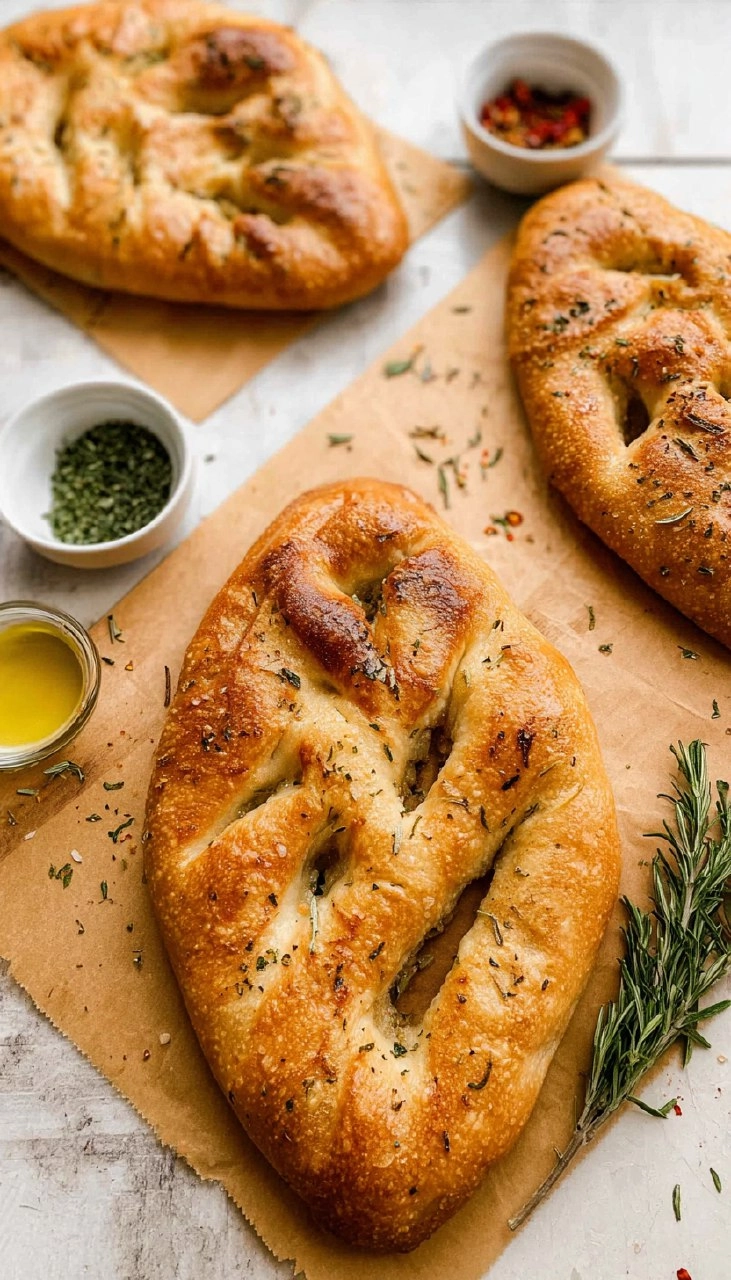
- Brush and Bake: Brush the fougasse with additional olive oil and sprinkle with your choice of herbs or flaky sea salt. Carefully slide the fougasse with the parchment onto the preheated baking surface.
- Bake: Bake for about 20 minutes, or until golden brown. It should sound hollow when tapped on the bottom, and an instant-read thermometer should read 190-200°F (88-93°C).
- Serve: If you like, brush the warm bread with a little more olive oil. Enjoy it warm with dipping oil and balsamic vinegar, as a side to a salad, or on a cheese board.
- Store: Fougasse is best enjoyed the day it’s baked, but cover any leftovers and keep them at room temperature for up to 2 days. If desired, reheat in a 350°F (177°C) oven for 5 to 8 minutes to give it some crispiness back.
Storing & Reheating
To store your homemade fougasse, wrap it in a clean kitchen towel and keep it at room temperature for up to two days. You can refrigerate it in an airtight container for up to a week; however, the texture may become softer. For longer storage, freeze the bread for up to three months in a freezer-safe bag. When you’re ready to enjoy it again, simply reheat in a 350°F (177°C) oven for 5 to 8 minutes, reviving that freshly baked quality.
Chef’s Helpful Tips
- Avoid over-kneading your dough to maintain that lovely airy texture; it’s about just mixing until smooth.
- For best results, make sure your water is at the right temperature—too hot can kill the yeast!
- If your dough is too sticky during formation, lightly flour your hands rather than dumping excessive flour into the mixture.
- Experiment with toppings! Adding cheese or sun-dried tomatoes can lend even more flavor.
- Did you know? You can make the biga a day ahead to enhance the flavor—just let it rise overnight!
Making fougasse isn’t just about creating bread; it’s an adventure in flavor and texture that invites creativity in the kitchen. From its fragrant aroma to the delightful taste, it offers an experience that is both satisfying and enjoyable. Embrace the process, play with your flavors, and most importantly, relish this beautiful bread with friends and family. Enjoy every bite!
Recipe FAQs
Can I use all-purpose flour instead of bread flour?
How long does the dough need to rest?
What herbs can I use for topping?
How do I know when the fougasse is done baking?
More Dinner Recipes
- Marry Me Chickpeas
- Steak Bites
- Pizza Pasta
- Ham, Broccoli, and Cheese Baked Potatoes
- Air Fryer Onion Rings
👉 If you make my Fougasse (French-Style Flatbread) recipe, please leave a comment and a star rating — it really helps others discover the recipe.
Follow me on
Pinterest
for more easy recipes.

Fougasse (French-Style Flatbread)
- Prep Time: 45 minutes
- Cook Time: 720 minutes
- Total Time: 12 hours 45 minutes
- Yield: 12 servings 1x
- Category: Bread
- Method: Baking
- Cuisine: French
Description
Enjoy the delightful flavors of Fougasse, a simple French flatbread. With its chewy texture and rich olive oil flavor, it’s perfect for any meal or snack.
Ingredients
- 1 cup (130g) bread flour
- 1/8 teaspoon instant or active-dry yeast
- 1/2 cup (120g/ml) room-temperature water (about 70°f (21°c))
- 1 and 1/2 cups (195g) bread flour (spooned & leveled), plus more as needed
- 1/2 cup (65g) whole wheat flour (spooned & leveled)
- 3/4 teaspoon instant or active-dry yeast
- 1 teaspoon table salt
- 1/2 cup (120g/ml) room-temperature water
- 2 tablespoons (28g) extra-virgin olive oil, plus more as needed
- optional, for topping: flaky sea salt and herbs, such as rosemary, thyme, or herbes de provence
Instructions
- In a medium bowl, whisk together the bread flour and yeast. Add the water and mix until combined. Cover the bowl tightly and let rest at room temperature for 8–24 hours.
- In a large bowl, whisk together the bread flour, whole wheat flour, yeast, and salt. Add the biga, water, and olive oil, mixing until a shaggy dough forms.
- If using a stand mixer, knead with the dough hook on medium-low speed for 3–5 minutes. If mixing by hand, knead on a lightly floured surface until smooth, about 3–5 minutes.
- Drizzle olive oil around the inside of the mixing bowl. Place the dough in the bowl, turning it to coat in oil.
- Cover tightly and let the dough rest for 45 minutes to 2 hours.
- Visualize a clock on your dough. Fold it at the 12 o’clock mark towards 6 o'clock, turning the bowl 90 degrees each time until you've gone around once. Flip the dough over so it's seam side down.
- Cover tightly and let the dough rest for another 45 minutes to 2 hours.
- Turn the dough onto parchment paper and press it into a rounded triangle shape (about 12 inches long by 6 inches wide).
- Cover lightly and let rest for 30 minutes to 2 hours.
- Using a sharp knife, cut the dough lengthwise down the center and make diagonal cuts on each side, stretching the cuts to create holes.
- Cover lightly and let rest for another 30 minutes to 1 hour while preheating the oven to 450°F (232°C).
- Brush the fougasse with olive oil and sprinkle with herbs and/or sea salt. Slide it onto the preheated baking stone or baking sheet.
- Bake until golden brown, about 20 minutes. The internal temperature should read 190–200°F (88–93°C).
- If desired, brush warm bread with more olive oil. Serve warm with dipping oil, balsamic vinegar, or alongside soup or salad.
Notes
Fougasse is best enjoyed freshly baked.
Store any leftovers covered at room temperature for up to 2 days.
To reheat, place in a 350°F (177°C) oven for 5–8 minutes.
Nutrition
- Serving Size: 1 serving
- Calories: 210
- Sugar: 1g
- Sodium: 200mg
- Fat: 4g
- Saturated Fat: 1g
- Unsaturated Fat: 2g
- Trans Fat: 0g
- Carbohydrates: 37g
- Fiber: 2g
- Protein: 6g
- Cholesterol: 0mg